Back to The Lab

It Ends with Tech SEO

Photo of Bipin Padhiar
Bipin Padhiar
SEO Specialist

How Technical SEO is Exposing Hollywood’s Legal Drama

If you thought technical SEO was just about ranking websites and optimising page speeds, think again.

Right now, it’s being used to pick apart not just search algorithms but also major high-stakes lawsuits involving numerous Hollywood A-list celebrities. Three massively intertwined legal Tinseltown battles, worth a combined payout in the region of over $650 million, are being scrutinised through the lens of digital footprints. And guess what? The internet’s sleuths are finding inconsistencies using technical SEO elements that could bring these cases crashing down before they even see a courtroom.

Our blog focuses on three of these technical SEO elements to provide more explanation and insight. All relate to the article published by the New York Times on 21st December 2024, titled ‘We Can Bury Anyone’: Inside a Hollywood Smear Machine.

So grab your SEO tools, wear your analyst hat, and settle in for a juicy organic metadata story...

A Brief Background into the Three Hollywood Lawsuits Caught in the Crossfire

  1. Blake Lively vs Justin Baldoni & Wayfarer Studios

    • In December 2024, Blake Lively filed a complaint with the California Civil Rights Department against Justin Baldoni, alleging sexual harassment and retaliation during the production of "It Ends with Us."

    • She claims that Baldoni engaged in inappropriate behaviour, including unsolicited physical contact and creating a hostile work environment. Following this, Lively filed a federal lawsuit accusing Baldoni and his associates of orchestrating a smear campaign to undermine her credibility in response to her allegations. Read the full lawsuit here.

  2. Justin Baldoni vs. The New York Times

    • Baldoni has filed a $250 million lawsuit against The New York Times, arguing that they misrepresented key details and selectively used information to paint him in a negative light in their article. Read the full lawsuit here.

  3. Justin Baldoni vs Blake Lively and Ryan Reynolds

    • Justin Baldoni and Wayfarer Studios filed a $400 million lawsuit against Blake Lively, Ryan Reynolds, and publicist Leslie Sloane, alleging extortion, defamation, and invasion of privacy.

    • The suit claims that Lively and her associates engaged in a coordinated effort to tarnish Baldoni's reputation and derail his career, following disputes during the production of "It Ends with Us." Read the full lawsuit here.

How Technical SEO is Changing the Game

Digital marketers know that SEO isn’t just about rankings—it’s about data, patterns, and timestamps. And this time, it’s proving crucial in exposing Hollywood’s and the mainstream media's legal inconsistencies.

image url seo

1. Image URL Metadata & The New York Times’ Timing Issue

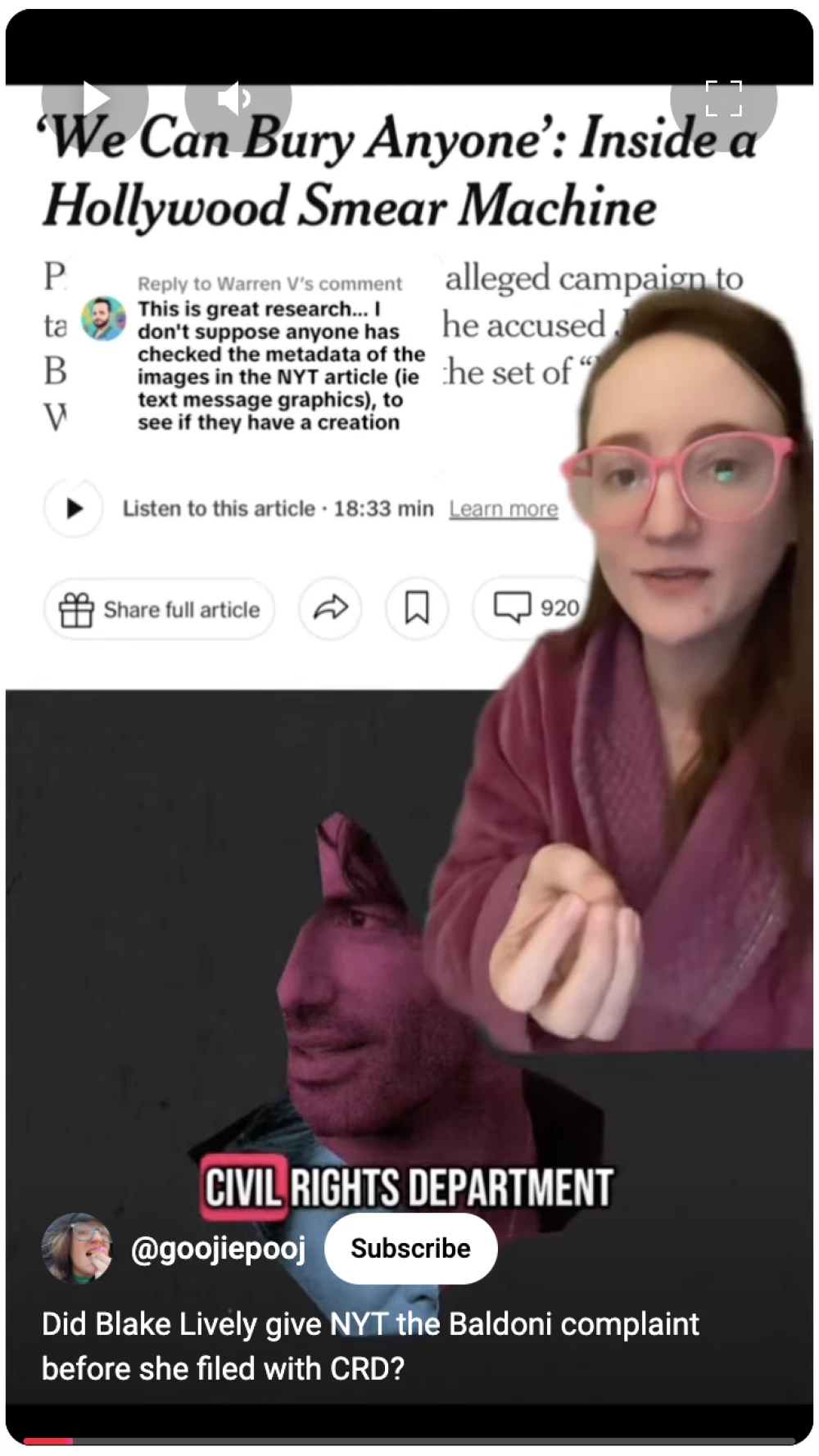
  • Social media influencer turned digital detective '@goojiepooj' analysed image URLs in The New York Times article and found timestamps indicating they were uploaded as far back as 16th December 12, 2024.

  • The article itself wasn’t published until December 21, 2024, and Lively’s lawsuit was only filed on December 20, 2024.

  • So how was the article being put together before the lawsuit even existed? That’s the question everyone is now asking.

kaweb analysis...

While many are referring to this element as 'metadata,' that's not strictly true.

Metadata generally refers to structured data within a webpage’s HTML (such as <meta> tags in the <head> section), some argue that image URLs can function as metadata when they imply information about the image.

Technically speaking, an image URL itself is not metadata, but it can suggest metadata depending on how it is structured and used.

As @goojiepooj quite rightly points out, the image URL could have been 'mislabelled,' as this element is fully customisable and can be named absolutely anything.

2. 'Message Embed Generator' date stamp in embedded text message.

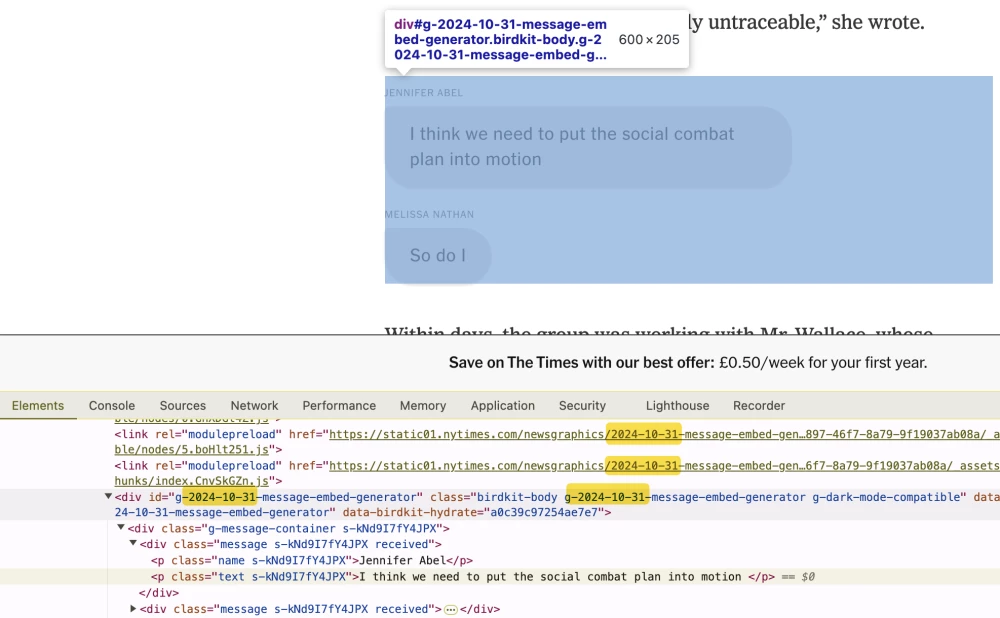
YouTuber Candace Owens, in her video - The Taylor Swift Plot Thickens | Candace Ep 142 discusses how internet 'detectives' discovered a timestamp for one of the page's embedded text messages within the New York Times article dated 31st October 2024, moving the timeline even further back from the date of Lively's lawsuit being filed.

This was found by right-clicking the embedded text message and clicking 'inspect' to view the code of the webpage.

kaweb analysis...

Understanding the Date Stamp in the "Message Embed" Element

When inspecting the 'Message Embed' - i.e. the part of the page where the text messages are shown - using DevTools (Inspect Element), a date stamp in the element's identifier ( "g-2024-10-31-message-ember-generator") can potentially provide insight as to when the embed was processed or fetched. However, its accuracy and reliability depend on multiple factors.

  • What Does the Date Stamp Tell Us?

    The date stamp in this element can indicate one of the following:
    ✅ When the source material used in the embed was generated
    ✅ When the source material was uploaded to platform’s embed system
    ✅ When the source material was last cached by the platform’s embed system
    ✅ When the website's embed code was last generated

    📌 It does not necessarily prove when the embedded material - i.e. the text messages - were first uploaded to the original website.

  • Understanding the <link rel="modulepreload"> Element

    When inspecting a webpage’s DevTools (Inspect Element), you may see a <link rel="modulepreload"> element. This relates to how modern browsers handle JavaScript module preloading - it is used by browsers to preload JavaScript modules before they are needed, improving page performance.

  • What Does the Date in <link rel="modulepreload"> Tell Us?

    In the NYT article, the <link rel="modulepreload"> elements have an href attribute that includes a date. But for the same reasons as the date stamp in the 'Message Embed', the date could mean multiple things including the last time the underlying code was generated, a separate thing to when the webpage itself was published.

Can This Prove When an Image Was Embedded?

Not definitively. While the date in modulepreload/embed code can hint at when content was published, it does not prove when the content was created, nor when it was first embedded in a webpage.

3. Cached Lawsuit PDFs vs. Internal Document Data

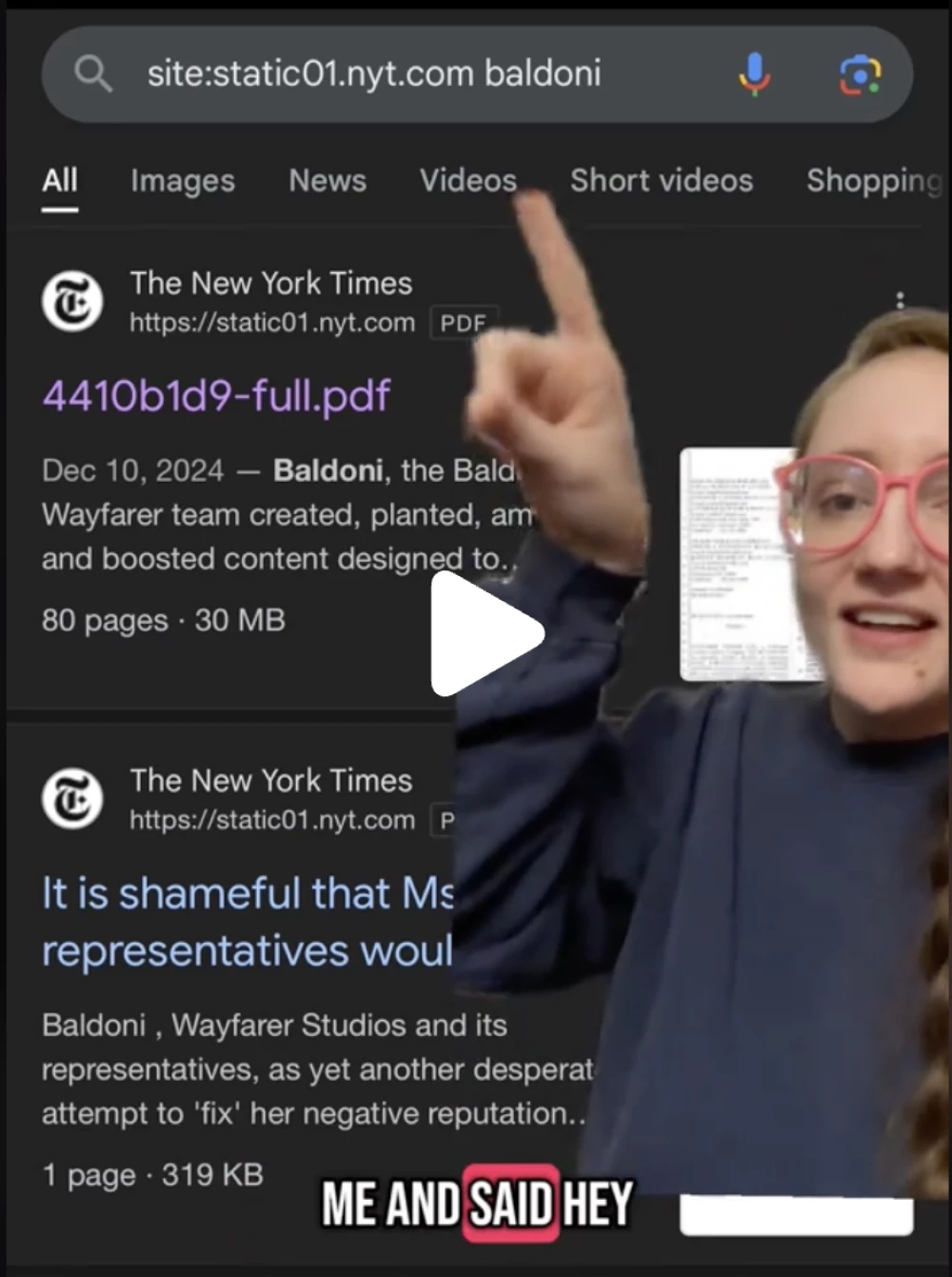
  • A lawsuit PDF that should have only existed after the lawsuit was filed actually had a cached version dated 10th December, 2024. This was evidenced by @goojiepooj using a simple Google site search operator.

  • However, the document metadata shows it was “created” on 21st December, 2024.

  • The discrepancies suggest that legal documents may have been prepared and stored before official filings, raising serious questions about document integrity.

kaweb analysis...

A "Google site search operator" is a special command, usually written as "site:" followed by a website domain, that allows you to restrict your Google search results to only pages found on that specific website. Essentially, this is a quick and great way to search within a particular domain instead of the entire internet - a feature commonly used in the SEO industry.

The date within 'Document Properties' in a PDF can provide useful information, but its accuracy depends on multiple factors, including how the PDF was created, modified, and saved. PDFs store metadata, including creation and modification dates, but these timestamps are not always reliable evidence of when a document was first written, published, or embedded.

Can PDF Metadata Prove When a Document Was Published?

Not necessarily. PDF timestamps can be manipulated, and they don’t always align with public availability.

How Accurate is the PDF Creation Date?

The accuracy of the "Creation Date" depends on:

🔹 If the PDF was created directly from a source document (e.g., Microsoft Word, Google Docs) → The date is likely accurate, but only represents when the file was converted to PDF.
🔹 If the file was modified and re-saved → The "Modification Date" will update, but the "Creation Date" might remain unchanged.
🔹 If a PDF is duplicated or copied → The "Creation Date" might reflect when the new file was created, not the original.
🔹 If the metadata was manually altered → Some tools allow users to edit metadata, meaning the timestamps can be falsified.
🔹 If the document was downloaded from the web → The "Creation Date" could be based on when it was saved locally, not when it was originally published.

The Role of Social Media in Digital Investigations

SEO data aside, fans and critics are now analysing who followed and unfollowed whom, when posts were made, and even deleted content.

  • Colleen Hoover, the bestselling author of 'It Ends With Us' caught in the mess, suddenly deactivated her multi-million-follower Instagram account. Was she avoiding backlash or hiding something?

  • Old comments are being dug up, and every digital move is being scrutinised.

Why SEO Forensics is the Future of Investigations

One thing is clear: certain digital footprints don’t lie. Whether it’s Google cache, Wayback Machine archives, or retained technical audits, these tools are now being used beyond marketing to uncover hidden truths or at the least, questionable material to be scrutinised further, in high-profile cases. This Hollywood drama may not need a trial—because SEO might already be delivering the evidence needed to sway public opinion!

What This Means for Businesses

(and Why You Need a Technical SEO Audit)

At Kaweb, we don’t just optimise websites - we uncover data, patterns, and insights that can change the game. If SEO can help expose multimillion-dollar lawsuits, imagine what it can do for your business.

Our technical SEO audits dive deep into your site’s structure, indexing, metadata, and digital footprints to ensure your brand is protected, optimised, and ranking for the right reasons. If you want to stay ahead of the curve, let’s talk about how Kaweb’s SEO expertise can help you navigate the digital landscape like a pro.

Want a free SEO consultation? Let’s chat.

Get in touch to boost your digital presence.

It starts with us!