
SEO Specialist

Right, let's talk about SEO. Yes, I know. The phrase alone is enough to make most people reach for a biscuit and stare blankly into space. But something genuinely significant happened last week, and if your business relies on people finding you on Google (that means you), it's worth knowing about. Grab that biscuit, and we'll keep this as painless as possible.
On Tuesday, 19 May 2026, Google held its annual I/O developer conference, and they came with a lot to say. Like, a really uncomfortable amount. This wasn't a quiet update or a minor tweak behind the scenes. This was Google standing up and saying, out loud, that Search is being fundamentally rebuilt around artificial intelligence. Partial yawn, as this is no surprise, but now we have details!
So let's break down what actually happened.
Here's a fun bit of trivia: the Google search box has looked and worked in pretty much the same way since 1998. You type a few words, Google rummages through the internet, and back comes a list of links and snippets. Simple, effective, and deeply unglamorous. Well, that era looks to be officially over.
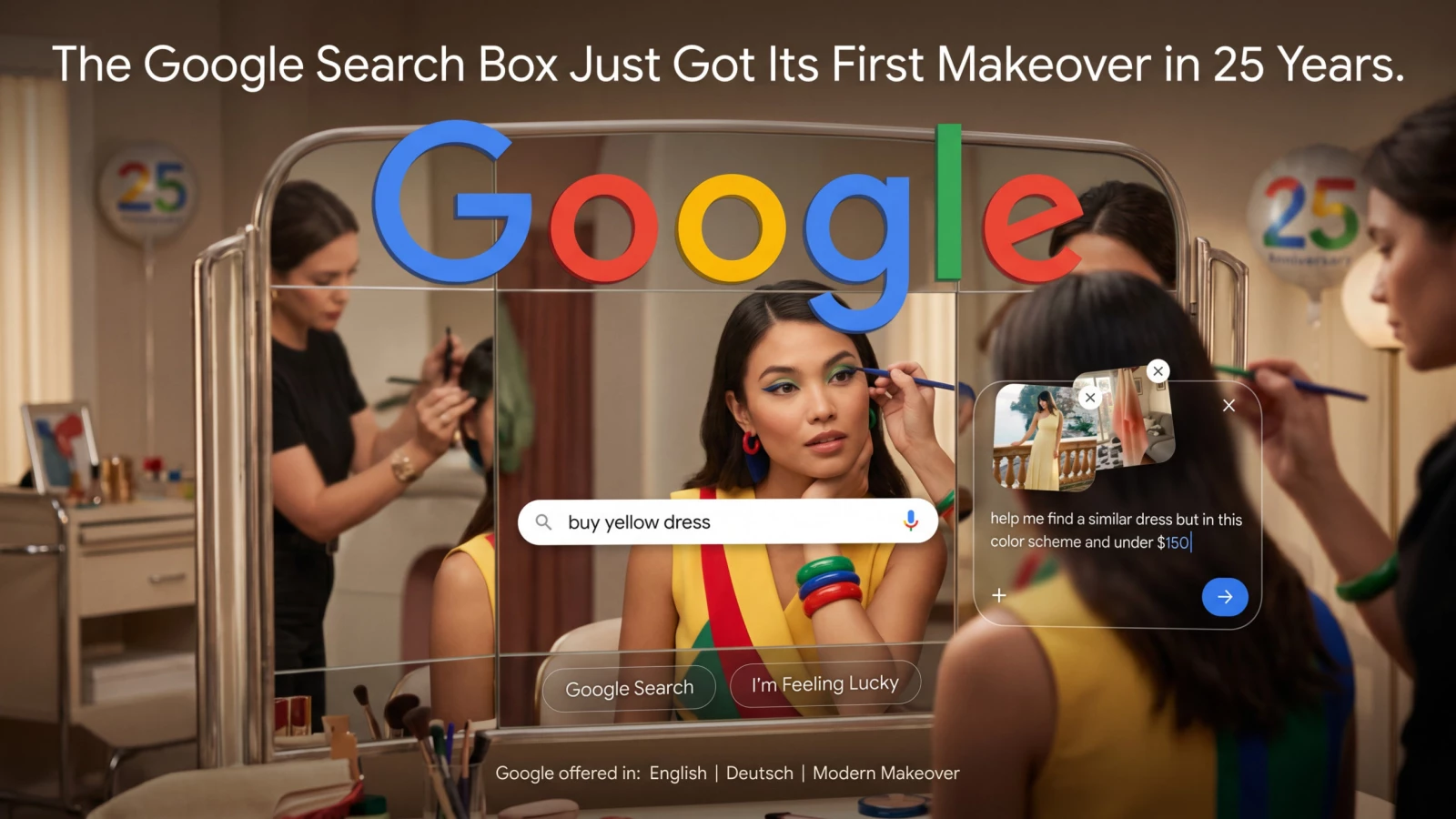
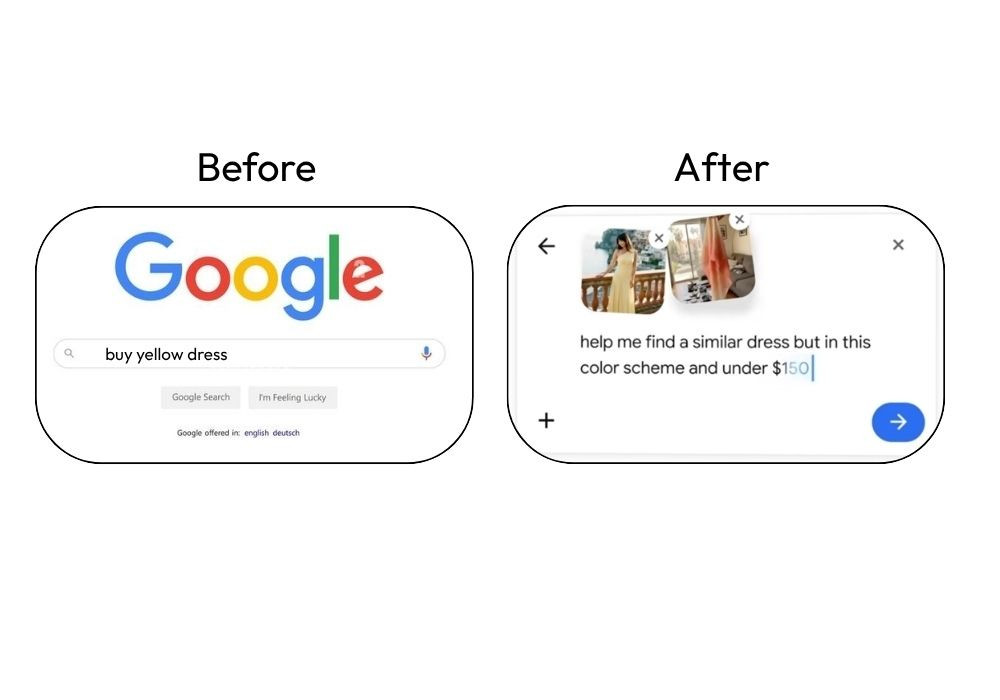
Google unveiled what it's calling the "Intelligent Search Box", describing it as the biggest change to its search interface in 25 years. So what does that actually mean in practice? The redesigned box gives searchers more space to ask longer, deeper questions, and it will expand as you type, with an AI-powered suggestion system that goes well beyond the old autocomplete feature.
EMBED YOUTUBE VIDEO: https://www.youtube.com/watch?v=p6EBMG8OEBI
You can now search with text, images, files, videos, or even your open Chrome tabs. So instead of typing "what's wrong with my boiler" and hoping for the best, you could, in theory, photograph your boiler's error code and upload it directly into the search box. Google is trying to meet people where they are, rather than forcing them to translate their real-world problem into five searchable keywords.
Google's CEO, Sundar Pichai, described Search as evolving from individual queries to ongoing conversations and now to agentic workflows, calling it the most used product in the world and pledging that Google will keep evolving to stay ahead of where users want to be.
That's Google-speak for: things are changing fast, and they're not stopping.
Behind all of this sits a brand-new AI model. Google announced Gemini 3.5 Flash at I/O 2026, with its head of Search, Liz Reid, confirming it is now the default model powering AI Mode in Google Search globally.
If you've never heard of AI Mode, think of it as the layer of Google Search that generates those long, written summaries at the top of your results rather than just showing links. It's the bit that's been quietly eating into the traffic that used to flow to websites.
Google's CTO of DeepMind described Gemini 3.5 Flash as four times faster than other frontier models while delivering intelligence that rivals much larger AI systems, landing in what he called the "top-right quadrant" of speed and quality. In plain English: it's smarter and faster than what came before. That matters because a smarter AI gives more detailed answers, which means fewer people clicking through to the websites those answers came from. Good news for impatient searchers. A genuine challenge for website owners.
Gemini 3.5 Flash is now powering AI Overviews and the overhauled search box, including new capabilities like YouTube video summarisation.
AI Overviews, for anyone keeping count, now reach 2.5 billion monthly users, while Google's dedicated AI Mode has crossed the 1 billion user milestone. Those are not small numbers. That is most of the internet.
This one is genuinely a bit wild, so stick with me. Google also announced what it's calling "information agents", and these are not chatbots that answer your questions. These are autonomous AI agents that work in the background, around the clock, on your behalf.
Operating 24 hours a day, seven days a week, these agents intelligently reason across information to find exactly what you need at exactly the right moment, then send you an intelligent synthesised update with the ability to take action.
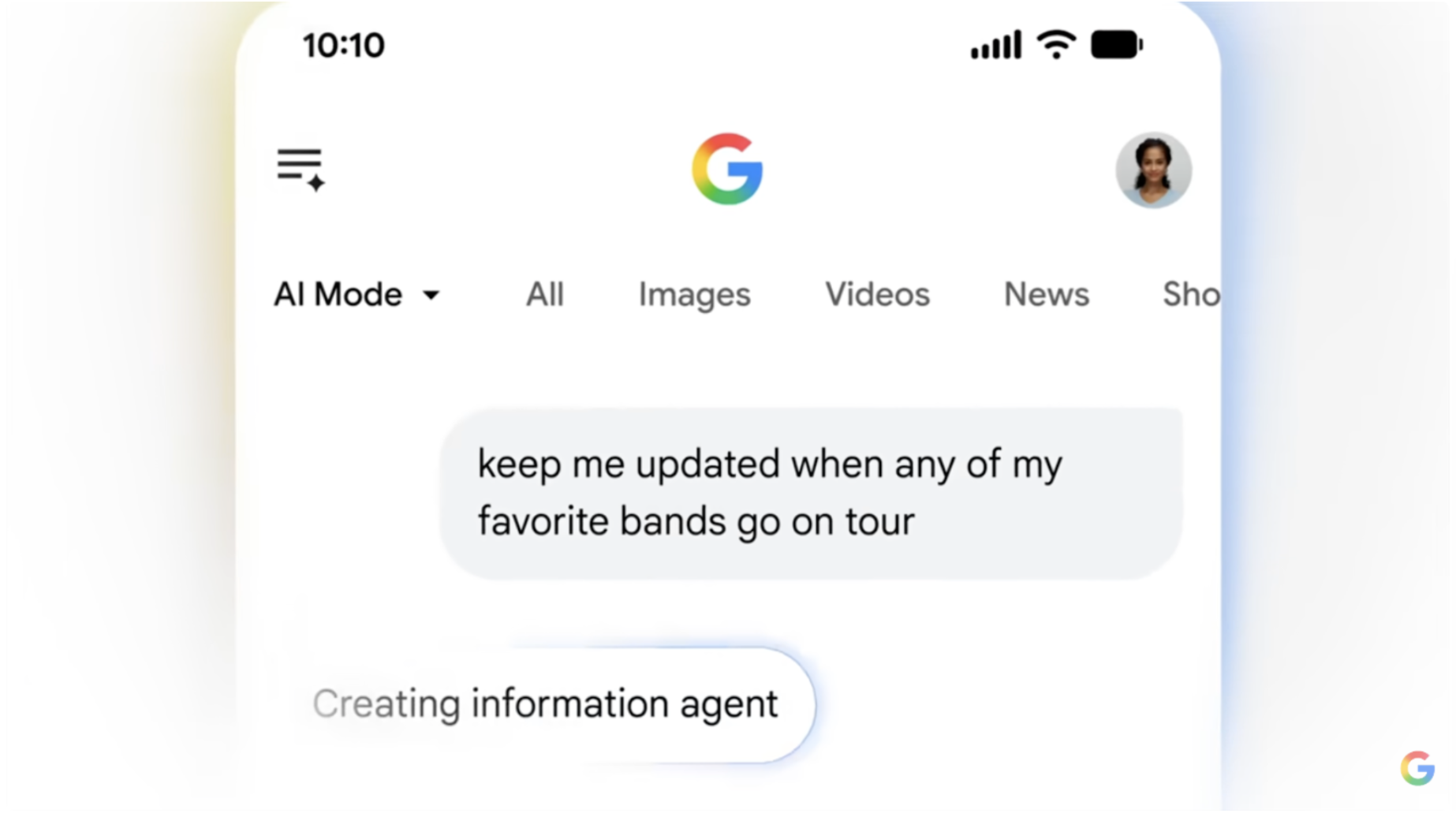
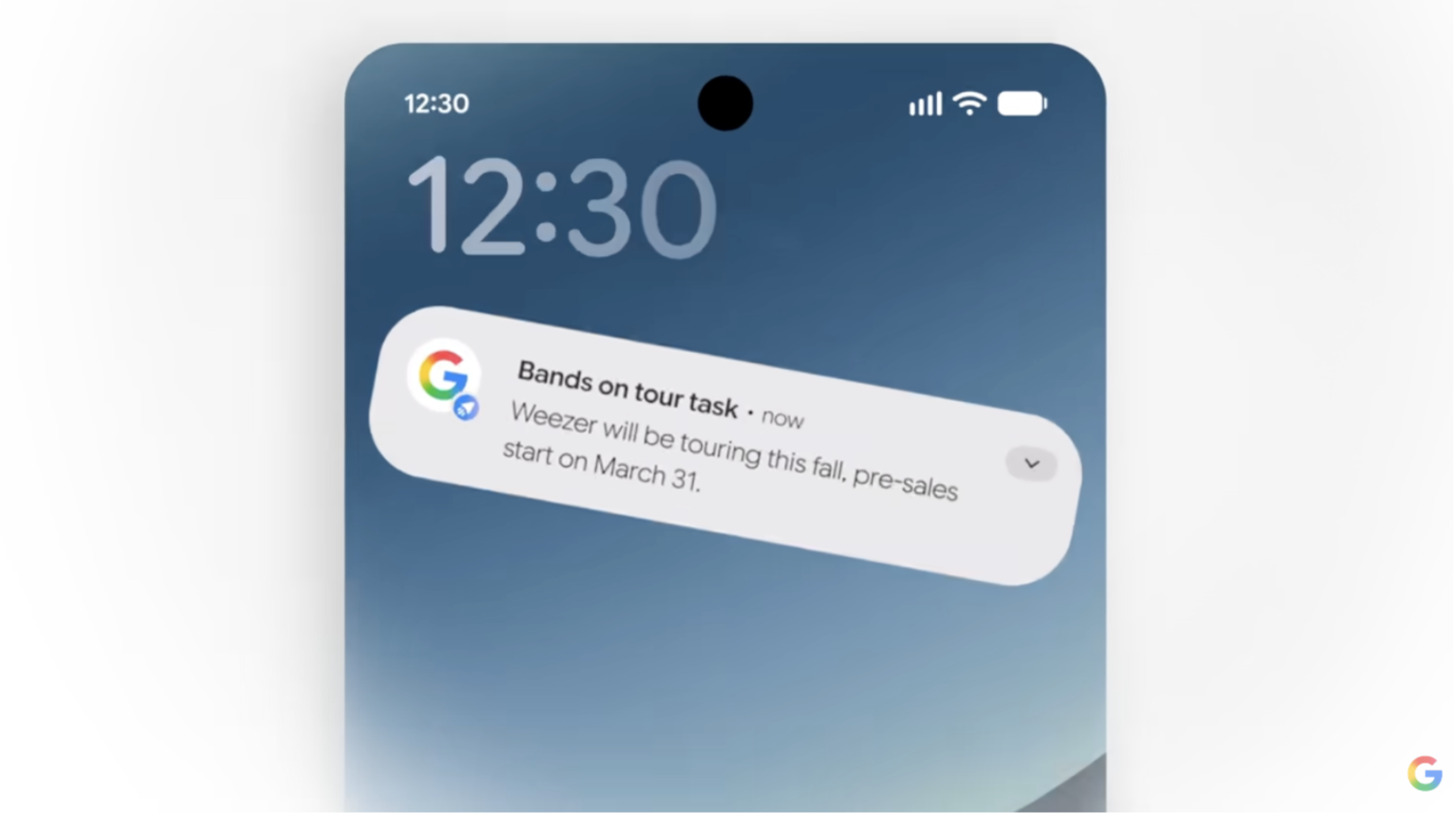 Image credits: Google
At I/O 2026, Google described AI Mode as increasingly becoming the default way more people research, compare, and decide, with Search itself gaining background agents that monitor the web without users needing to do anything.
What this means for businesses is worth sitting with for a moment. If an AI agent is researching options on a user's behalf, the agent has to find your business first, and find it in a format it can understand. If your website is a wall of vague marketing copy with no clear, structured information, the agent moves on. It doesn't give you the benefit of the doubt the way a patient human might.
For SEO, the goal is no longer just optimising for a list of keywords to rank on page one. Structuring your digital presence so Google's AI agents can confidently extract, trust, and recommend your products and services is the new target. This is a significant shift in what "being found online" actually requires.
Quietly, before the I/O fireworks, Google published an official guide on 15 May on how to optimise your website for its AI-powered features. The surprising part? Google explicitly dismantled the entire narrative built around newer acronyms like AEO (Answer Engine Optimisation) and GEO (Generative Engine Optimisation), pulling everything back to a single discipline: SEO done well.
There's been a lot of hand-wringing in the industry over whether traditional SEO is dead and whether businesses need to throw out everything and start again with a completely new approach. Google's own guidance suggests: not quite. The fundamentals still matter. Good, clear, trustworthy content. A website that loads properly and is easy to navigate. Accurate information about your business. What's changed is that those fundamentals now need to serve both human readers and AI systems reading your site. The bar has gone up, but the direction hasn't completely reversed.
Here's where things get a little more complicated and a thoughtful piece from Search Engine Journal this week is worth paying attention to.
For the last two decades, there was a comfortable truth in SEO: follow Google's guidance, and broadly speaking, you'd be in reasonable shape across all search engines. The big platforms shared enough common standards that optimising for one mostly helped you with the others.
That world doesn't exist in the AI landscape. Major providers train on different data sources, run different crawlers under different policies, route different queries through different retrieval systems, and apply different processes that shape the final response in ways the upstream signals can't predict.
ChatGPT, Perplexity, Google's Gemini, and Anthropic's Claude are all drawing from different wells. Getting recommended by one of them doesn't guarantee visibility on the others.
Research analysing 118,000 AI responses across major platforms found that only 11% of cited domains appeared across multiple platforms. The other 89% were platform-specific. In other words, a business showing up confidently in ChatGPT answers may be largely invisible in Google's AI Mode. The overlap is much smaller than most people assume.
What does that mean practically? It means that brands need to think beyond just Google. Getting cited by AI systems increasingly depends on having a strong, credible presence across the broader web: authoritative third-party mentions, clear factual content, and visibility in the sources those AI systems actually pull from. It's less like placing an advert and more like building a reputation.
If you've made it this far, well done, and thank you for your patience with what is, admittedly, a fairly dry subject dressed up in its best clothes. Here's the practical takeaway.
Your website content needs to be clear, factual, and genuinely useful rather than vague and padded out to fill a word count. AI systems are good at spotting the difference, and they tend to cite sources that give direct, trustworthy answers rather than sources that dance around the point for three paragraphs before saying anything. If a robot reading your website can't immediately understand what you do, who you do it for, and why you're credible, that's worth fixing.
Your business information needs to be accurate and consistent everywhere it appears: your website, your Google Business Profile, directories, review sites, and any other platform where your name shows up. AI agents cross-reference these sources, and inconsistencies undermine trust in a way that's hard to recover from.
And finally, it's worth thinking about where else your brand gets mentioned beyond your own website. Press coverage, industry directories, customer reviews, and appearances on credible third-party sites all feed into how AI systems perceive your authority. Building that kind of presence takes time, but it's increasingly one of the most valuable investments a business can make in its online visibility.
The rules of the game have genuinely changed. The good news is that most of the underlying principles of good SEO, being clear, being credible, and being genuinely useful, are still very much in play. They've just got a bigger audience than ever before.
One more thing worth flagging: right on the heels of the I/O announcements, Google released its May 2026 Core Update on 21 May, the second broad core update of the year. Google described it as "a regular update designed to better surface relevant, satisfying content for searchers from all types of sites," which is about as specific as Google tends to get on these things. The rollout could take up to two weeks to complete, meaning rankings may continue shifting until around early June. If you've noticed your website traffic or search positions moving around this week, this is very likely why. As always with core updates, Google's advice is essentially to focus on producing genuinely helpful, trustworthy content rather than looking for a specific technical fix, which is both reassuring and slightly unhelpful in equal measure. If things haven't settled down by mid-June, it's worth getting someone to take a proper look.
As always, if you'd like to talk through what any of this means for your business specifically, the team at Kaweb are here. No jargon, no unnecessary drama, just practical advice. You know where to find us.